
27 March 2021 by Wolfgang Münchau (from Financial Time)
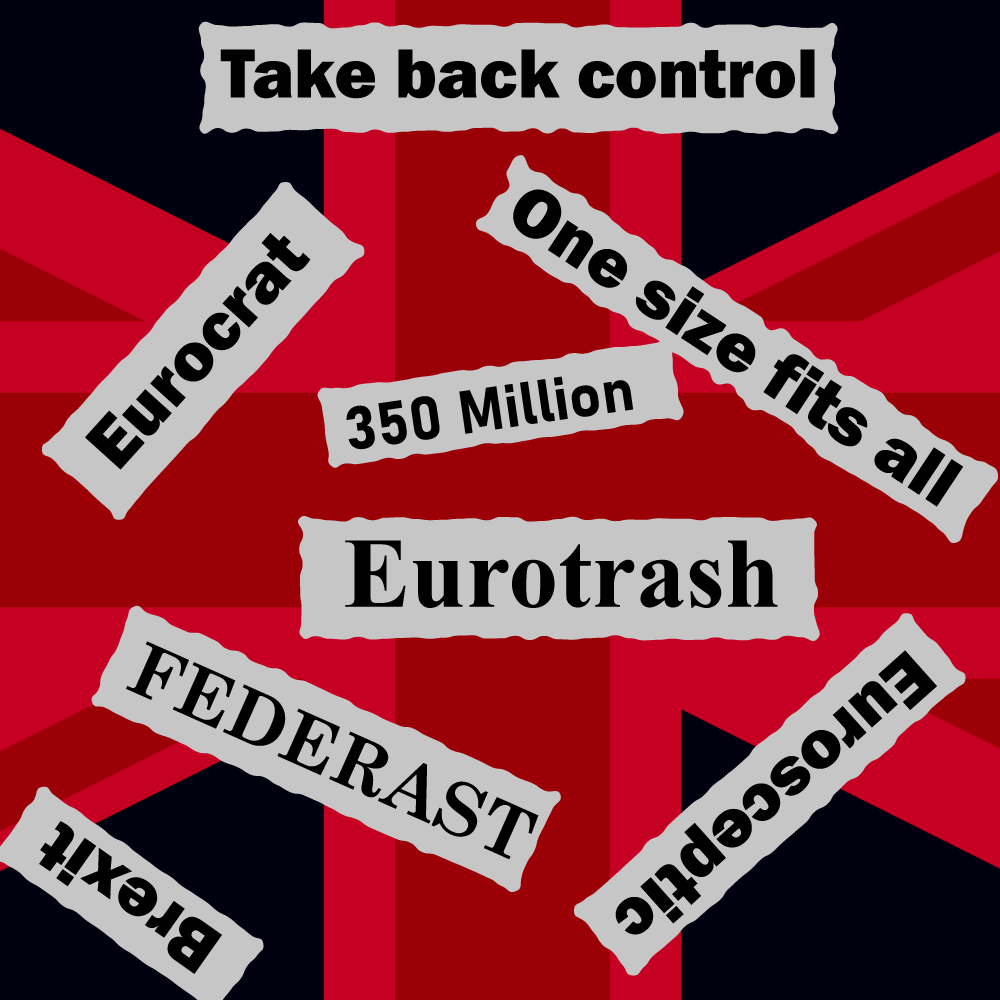
It was back in the late 1980s when I worked on the staff of the Times newspaper in London that I heard the word eurosceptic for the first time. It was during the days of confrontation between Margaret Thatcher and Nigel Lawson, her finance minister, over whether or not the UK should join the exchange-rate mechanism. Three years later, a colleague and friend of mine casually remarked, to my profound shock, that the eurosceptics were winning the argument. At some point in between, I recall another colleague, one of the rising young stars of the paper, writing a review of a French movie he detested. This was the first time I heard the word eurotrash. The word eurocrat had been invented many years earlier. Also interesting that UK newspapers, pro and anti-EU alike, habitually refer to the EU as a bloc - as in Eastern Bloc.
Words creates stories. And stories give rise to narratives, which are stories that we keep telling each other time and again. The eurosceptics controlled the narrative through the media, on which the EU has become perversely over-reliant. French was the lingua franca of the European Economic Community when it had only six members. But the larger the EU became, the more English was spoken. Euroscepticism became its most dominant dialect.
https://ces.fas.harvard.edu/people/002175-wolfgang-münchau